This image is, in my opinion, a shortened timeline of how culture and technology have worked hand and hand in design. The sketch of a rough sphere portrays the first imagine showing an example of the first attempts at shelter which had more organic forms. The sharp cube illustrates the rectilinear quality that we are more familiar with seeing in our architecture today. Lastly the smooth cube with filleted edges represents the new movement in architecture that encompasses the organic characteristic as the first while also maintaning the rigor of the second with an added bonus of sustainability.
Monday, September 14, 2009
Short Time Line
This image is, in my opinion, a shortened timeline of how culture and technology have worked hand and hand in design. The sketch of a rough sphere portrays the first imagine showing an example of the first attempts at shelter which had more organic forms. The sharp cube illustrates the rectilinear quality that we are more familiar with seeing in our architecture today. Lastly the smooth cube with filleted edges represents the new movement in architecture that encompasses the organic characteristic as the first while also maintaning the rigor of the second with an added bonus of sustainability.

Reading Response - "Artchitecure as Conceptual Art"
After reading this article I seemed to have opened many more mental doors regarding my thesis. As I continue the discussion of the culture vs. technology I find more and more examples of both pulling me back and forth. Silvetti brings up a two crucial periods in time that made me think of differently in how the architecture world impacts technology and our culture.
"And since I want to focus not on the specific buildings and architects, but instead on design strategies and techniques that [produce architectural form, and the ideas and ideologies behind them, suffice it to sat that the period and corpus I am looking at cold be bracketed by the exultant irruption in the world and in our imagination of the Guggenheim Bilbao and the wound to out affects left by the physical consequences of September 11 attach, the disappearance of two buildings we did not know we would miss so much."
My focus being mostly on the mention of the Guggenheim and the Twin towers. Both of these icons in architecture were only considered famous, not because of the architectural genius but, because of the cultural identity that they knowing and unknowingly had among the community. For example, the Guggenheim is well known to be an icon in Spain now because Frank Gehry placed an extravagant (and unorthodox) piece of architecture in a city that was struggling at the time. Its presence redefined much of the culture, though some believe its was not entirely positive. The Twin towers on the other hand, had quite a different impression on the American culture. The fact that the architecture was indeed an American icon that had graced the NYC skyline for so long was a shock to the public when it was no where to be seen within hours. Though that moment in time has been known for its negative affects, one can see the slight change in culture that it has provoked; that is, increase in security and an overall sense of pride for freedom (Hence: The Freedom Towers)
Another quote that seemed to help with my thesis brainstorming would be categorized more with the technology of architecture.
"We make Blobs because we can, and that was, for a while, sufficient reason...Yet I would like to emphasize their valid promise of more substantial achievements, which must be pursued, since technology has become a natural part of our doings"
Advancement in building methods and design tools has allowed architecture to design many buildings that often are only based on form and not function. As the demand for more sustainably increases, the bar continues to rise on expectations of building performance. Even the 'Blobs' that were possible before due to advancements in materiality seem to now also rely on the advancement of green technologies. it is an evolution of technology... a culture of technology
"And since I want to focus not on the specific buildings and architects, but instead on design strategies and techniques that [produce architectural form, and the ideas and ideologies behind them, suffice it to sat that the period and corpus I am looking at cold be bracketed by the exultant irruption in the world and in our imagination of the Guggenheim Bilbao and the wound to out affects left by the physical consequences of September 11 attach, the disappearance of two buildings we did not know we would miss so much."
My focus being mostly on the mention of the Guggenheim and the Twin towers. Both of these icons in architecture were only considered famous, not because of the architectural genius but, because of the cultural identity that they knowing and unknowingly had among the community. For example, the Guggenheim is well known to be an icon in Spain now because Frank Gehry placed an extravagant (and unorthodox) piece of architecture in a city that was struggling at the time. Its presence redefined much of the culture, though some believe its was not entirely positive. The Twin towers on the other hand, had quite a different impression on the American culture. The fact that the architecture was indeed an American icon that had graced the NYC skyline for so long was a shock to the public when it was no where to be seen within hours. Though that moment in time has been known for its negative affects, one can see the slight change in culture that it has provoked; that is, increase in security and an overall sense of pride for freedom (Hence: The Freedom Towers)
Another quote that seemed to help with my thesis brainstorming would be categorized more with the technology of architecture.
"We make Blobs because we can, and that was, for a while, sufficient reason...Yet I would like to emphasize their valid promise of more substantial achievements, which must be pursued, since technology has become a natural part of our doings"
Advancement in building methods and design tools has allowed architecture to design many buildings that often are only based on form and not function. As the demand for more sustainably increases, the bar continues to rise on expectations of building performance. Even the 'Blobs' that were possible before due to advancements in materiality seem to now also rely on the advancement of green technologies. it is an evolution of technology... a culture of technology
Monday, September 7, 2009
Thesis:
1. Which has a greater influence (if any) on the other from an architecture stand point, the evolution of culture or the development of technology.
3...Technology and the human culture have always had a lasting impression on the architectural surrounds. The discussion can range from anything falling in one of the two categories that has influenced the architectural world in some way. Examples of this could be material use, generation of form, the overal profession, representational of ideas, occupancy, etc.
9.........I have chosen to use Barcelona as a case study for my research because of its vast history in cultural growth and its advancement in technology. This city has a good range of architecture and technology while also maintaining a great number of foreign inhabitants year round. An example of cultural influence on technology is the over population of cities that force sewage systems and urban organization to be better designed/considered. While an example of a technology based cultural change could be a heating and cooling system that allows a higher survival rate for people in rough climates. In recent years more electronics and robotics have been implemented in architectural construction. Some can see this as solely technology influencing culture but it also can be seen that the surrounding culture has begun to bring up the demand of electronics even when not necessary. I believe that studying how these two entities influence the architectural world will allow me to take a different look this profession as a whole. I will also gain a better understanding of what field will interest me most.
1. Which has a greater influence (if any) on the other from an architecture stand point, the evolution of culture or the development of technology.
3...Technology and the human culture have always had a lasting impression on the architectural surrounds. The discussion can range from anything falling in one of the two categories that has influenced the architectural world in some way. Examples of this could be material use, generation of form, the overal profession, representational of ideas, occupancy, etc.
9.........I have chosen to use Barcelona as a case study for my research because of its vast history in cultural growth and its advancement in technology. This city has a good range of architecture and technology while also maintaining a great number of foreign inhabitants year round. An example of cultural influence on technology is the over population of cities that force sewage systems and urban organization to be better designed/considered. While an example of a technology based cultural change could be a heating and cooling system that allows a higher survival rate for people in rough climates. In recent years more electronics and robotics have been implemented in architectural construction. Some can see this as solely technology influencing culture but it also can be seen that the surrounding culture has begun to bring up the demand of electronics even when not necessary. I believe that studying how these two entities influence the architectural world will allow me to take a different look this profession as a whole. I will also gain a better understanding of what field will interest me most.


Tuesday, September 1, 2009
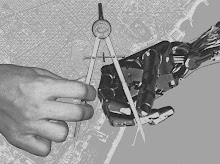
Thesis Concept Image
 In this image you see a man vs. machine scenario which represent my thesis topic: culture of man vs. advancement of technology. Here the compass acts as a wish bone in order to portray the idea that one of the two could have a predominant influence on the other architecturally. I have chosen to have a back drop showing the city of Barcelona because it is the region that I will extrapolate most of my findings from.
Monday, August 31, 2009
Culture v. Technology
As technology continues to excel, the culture of many worlds also continues to adapt. In my thesis I will attempt to understand which of the two entities influences the other more in an architectural focus, if possible. I have selected the city of Barcelona to base my research on. After recently visiting this gorgeous city, I believe their rich culture is equivalent to their advancement in technology.
Reading Response - 'How to Draw Up a Project,’ Jose Luis Mateo
Within the first page Mateo states, "if a project is a process, it is a process with a fixed direction." Though I do believe every project is indeed a process and not a 'peak moment,' there are many instances when a project can double back on itself and change completely from its original conceptual idea. In that case there is not a consistent forward motion in the process (as portrayed in this writing) but a gradual push and pull type climb to a finished design. Sometimes there can seem to be too many restrictions to a project that it loses many of the early, and most crucial, steps in conceptual design.
Mateo later states "Analysis is useful only if it leads to synthesis...'ideas' are necessary, but the less they imply a specific form the more useful they are." These are two statements that I agree with and try to keep in mind while designing. Though analysis can lead to better understanding of concepts and observations, there are plenty of forms of analysis that can be seen as 'useless' or irrelevant to a specific projects. Similarly, ideas, in my opinion are form drivers and should only hint at what specific forms will later prevail.
Mateo later states "Analysis is useful only if it leads to synthesis...'ideas' are necessary, but the less they imply a specific form the more useful they are." These are two statements that I agree with and try to keep in mind while designing. Though analysis can lead to better understanding of concepts and observations, there are plenty of forms of analysis that can be seen as 'useless' or irrelevant to a specific projects. Similarly, ideas, in my opinion are form drivers and should only hint at what specific forms will later prevail.
Subscribe to:
Posts (Atom)